
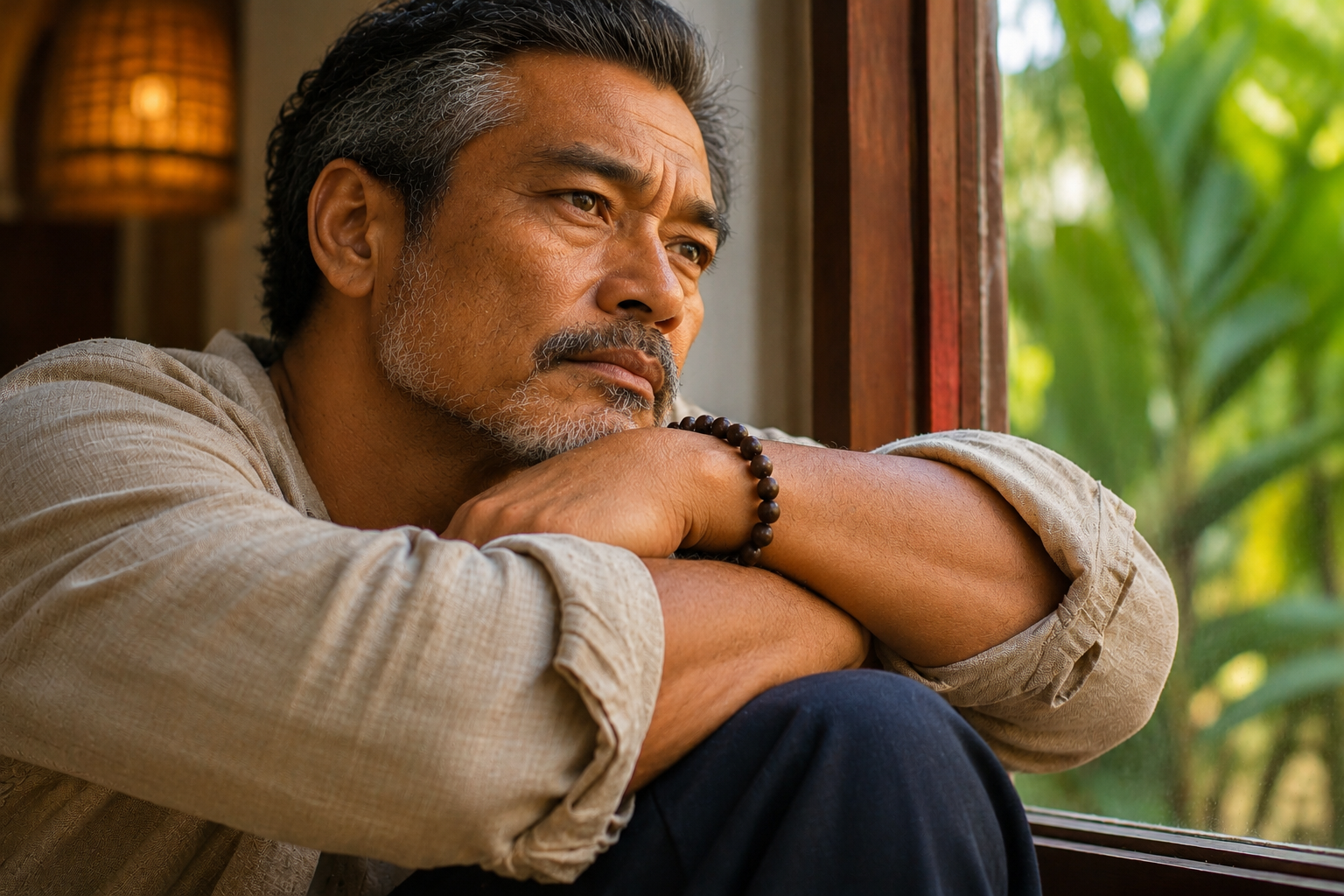
Male abuse is one of the most hidden forms of pain in our communities. It happens to boys and men far more often than we admit, yet it is rarely spoken about.
Who Holds the Man Who Has Always Been Told to Be Strong?
When was the last time you looked at a man and wondered whether he was hurting?
Not whether he was working hard, providing for his family, protecting the people he loves or fulfilling his responsibilities.
But whether he was hurting.
We ask women whether they feel safe. We talk about women’s experiences of domestic violence, sexual abuse, childhood trauma and emotional wounds. We have rightly created spaces for women to speak, to be heard and to begin healing.
But what about the men?
What happens to the little boy who was repeatedly beaten and told that it was discipline? The teenager who was sexually violated but couldn’t find the words to explain what had happened? The husband who lives with constant humiliation, threats and emotional manipulation? The man who was abused by someone he trusted but was too ashamed to tell anyone?
Who asks him if he is okay?
Male abuse is a subject that deserves far more attention. Not because men’s suffering is greater than women’s, but because pain does not discriminate according to gender.
And sometimes, the men who appear to be holding everything together are the ones who have been falling apart for years.
The Boy Who Was Never Allowed to Cry
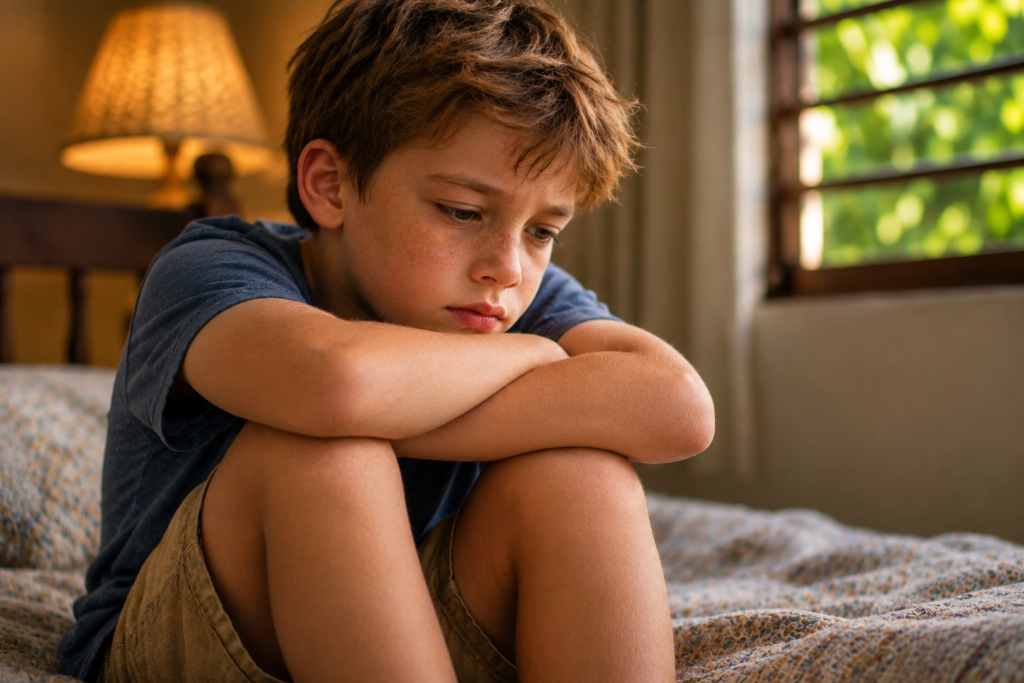 Some wounds begin long before we have the words to describe them.
Imagine a little boy.
He falls, scrapes his knee and begins to cry. An adult tells him, “Stop crying. Boys don’t cry.”
He is frightened, but he learns to swallow his tears.
He is hurt, but he learns to hide it.
He is confused, but nobody asks what happened.
As he grows older, the messages become more deeply embedded:
“Be a man.”
“Don’t be soft.”
“Stand up for yourself.”
“Take it like a man.”
And so he learns.
He learns that vulnerability is weakness. That asking for help is embarrassing. That admitting he has been hurt somehow makes him less of a man.
But what happens when the person hurting him is bigger, stronger, more powerful or someone he loves?
What happens when he cannot fight back?
What happens when the abuse comes from a parent, a relative, a partner, a teacher, an employer or someone he trusts?
He may never tell anyone.
…because he has been taught that his pain is something he should be able to manage alone.
Male Abuse Doesn’t Always Look the Way We Imagine
When we think about abuse, we often imagine a woman being physically assaulted by a man.
But men can also experience physical, emotional, psychological, sexual and financial abuse.
And sometimes, the abuse is so familiar that the man experiencing it doesn’t even recognise it.
Consider these situations:
-
A man whose partner constantly tells him he is useless, incompetent or incapable of making decisions.
-
A husband who is threatened with losing access to his children whenever he disagrees with his partner.
-
A man who is regularly slapped, hit, kicked or physically intimidated but feels too embarrassed to report it.
-
A boy who was sexually abused as a child and has spent decades believing that he should have been able to stop it.
-
A man whose partner uses intimacy, humiliation or threats to control him.
-
A man who is constantly monitored, isolated from friends and family, or made to account for every dollar he spends.
-
A man who is afraid to go home because he never knows what mood will greet him.
These are not simply relationship difficulties.
They can be signs of abuse.
Abuse is not defined by who is physically stronger, who earns more money or who is expected to be in control. It is about the misuse of power, intimidation, coercion and control.
And men can be victims of all of these.
When a Man Is Abused by a Woman
This is perhaps one of the most uncomfortable conversations we need to have.
We have become more willing to acknowledge that women can be victims of abuse. Yet we sometimes struggle to accept that women can also be perpetrators.
A man who says his female partner hits him may be laughed at.
He may be told that he should be able to defend himself.
He may hear, “What kind of man allows a woman to beat him?”
Or someone might dismiss the experience by saying, “At least she isn’t strong enough to hurt you.”
But physical strength does not determine the impact of abuse.
A slap can humiliate. A threat can terrify. Repeated emotional cruelty can slowly dismantle a person’s confidence and sense of self.
And when a man finally speaks about what is happening, he may find himself defending his experience rather than receiving support.
Imagine how lonely that must feel.
Imagine being hurt by someone you love and then discovering that the people you turn to don’t believe you.
For some men, the shame of being disbelieved becomes another reason to remain silent.
The Sexual Abuse Men Rarely Talk About
There is another dimension of male abuse that deserves our attention: sexual abuse.
Boys and men can be sexually abused by women as well as men. It can happen in childhood, adolescence or adulthood.
Yet harmful myths continue to surround male sexual victimisation.
One of the most damaging is the belief that a boy or man should always welcome sexual attention.
Another is the assumption that a male who experiences a sexual violation must somehow have wanted it.
Neither is true.
Consent matters regardless of gender.
A person can freeze. They can be frightened. They can feel pressured or threatened. They can be manipulated by someone older or more powerful. They can be unable to resist.
An involuntary physical response does not mean consent.
And being unable to fight back does not mean that the experience was not abuse.
For a man who has been sexually violated, the confusion can be extremely deep. He may question his masculinity, his sexuality, his judgement and even his own memories.
He may carry the experience for years without telling a single person.
Some men bury the memory. Others become angry, withdrawn or emotionally disconnected. Some struggle with intimacy and trust.
And many simply get on with life, believing that what happened is something they must never discuss.
I think we all know from our own personal experiece that silence is not healing.
The Pain That Shows Up in Other Ways
Not every man who has experienced abuse will recognise himself in the word victim.
Some become extremely controlling because they cannot bear the feeling of being powerless again.
Some withdraw emotionally because closeness feels unsafe.
Some struggle to trust women or other men.
Some use humour to deflect serious conversations.
Some become workaholics, burying themselves in responsibilities so they don’t have to confront what is happening inside.
Some struggle with anger. Others become people-pleasers, constantly trying to avoid conflict.
And some find themselves repeating patterns they experienced in childhood, either in their relationships with others or in the way they treat themselves.
These responses do not automatically mean someone has experienced abuse. But they may be invitations to look more closely at what lies beneath the surface.
Sometimes the behaviour people criticise is connected to a wound nobody has ever helped them understand.
There is a difference between explaining behaviour and excusing harmful behaviour. A man’s trauma deserves compassion, but healing also involves taking responsibility for how we treat others.
To the Women Reading This: Could the Man You Love Be Hurting?
Perhaps you are thinking about your father.
Your brother.
Your son.
Your husband.
Your partner.
A male friend who always seems to have a joke ready whenever a conversation becomes emotional.
The man who gets angry but never seems able to explain what is really bothering him.
The man who works tirelessly, takes care of everyone else and never seems to ask for anything.
Could there be something beneath the surface?
We must be careful not to assume that every difficult behaviour is evidence of past abuse. But we can become more compassionate in the way we respond to the people around us.
Instead of telling a man to toughen up, perhaps we can ask him what he needs.
Instead of laughing when he speaks about being hurt, perhaps we can listen.
Instead of questioning his masculinity, perhaps we can affirm his humanity.
And perhaps, when he finally finds the courage to tell us something painful, we can resist the urge to judge, minimise or immediately offer solutions.
Sometimes the most healing words a person can hear are:
“I believe you.”
“I’m sorry that happened to you.”
“You didn’t deserve that.”
“You don’t have to carry this alone.”
Men need safe spaces too.
To the Men Reading This: What Happened to You Matters
I want to speak directly to the man who may have found himself in these words.
Perhaps you have never told anyone what happened to you.
Perhaps you have convinced yourself that it wasn’t really abuse because you are a man.
Perhaps you think you should have fought back, spoken up or walked away.
Maybe you have spent years pretending that it didn’t affect you.
Maybe you are still angry. Perhaps you struggle to trust people, or you find it difficult to let someone get close.
You may even feel ashamed of something that was never your fault.
I want you to consider that.
What happened to you does not determine your worth.
You were not less of a man because you were hurt.
You were not weak because you cried.
You were not responsible for someone else’s decision to violate, intimidate, humiliate or control you.
And you do not have to prove how much you suffered before you are allowed to seek help.
You deserve to be heard.
You deserve to feel safe.
You deserve relationships in which love does not come at the expense of your dignity.
Most importantly, you deserve the opportunity to heal.
Healing Is Not a Sign of Weakness
For many men, the first step towards healing is simply acknowledging that something happened.
That may sound straightforward, but it can take years to get there.
Trauma-informed support can help survivors explore painful experiences at a pace that feels safe, understand how those experiences may be affecting their present lives, and develop healthier ways of relating to themselves and others.
Healing does not mean forgetting.
It does not mean excusing the person who hurt you.
It does not mean that you must revisit every painful memory before you can move forward.
It means having the opportunity to understand your experiences without being defined by them.
And it means discovering that you can be strong and vulnerable at the same time.
Perhaps It Is Time We Changed the Conversation
 There is strength in allowing yourself to heal. Your past does not have to define your future.
We cannot continue to speak about abuse as though it is exclusively a women’s issue.
We can acknowledge the disproportionate impact of certain forms of violence on women while also making room for the experiences of men.
We can advocate for women without dismissing men.
We can support male survivors without diminishing female survivors.
Pain is not a competition.
And healing should never be reserved for one gender.
Perhaps the man sitting beside you has a story he has never told.
Perhaps the boy you once were is still waiting for someone to acknowledge what happened.
Perhaps the person who has spent a lifetime being strong needs permission to put down the weight for a moment.
So, the next time you ask a man how he is doing, perhaps wait long enough for an honest answer.
And to the man who has spent years suffering in silence, please know this:
You matter. Your pain matters. Your story matters. And it is never too late to begin healing.
If this has stirred something in you, you may also find it helpful to read What Silence Means: Trauma, Fear, and the Need for Safe Spaces.
A Final Word from Dr Sandra Hamilton
My work in trauma recovery has reinforced something I believe deeply: people cannot begin to heal what they have never felt safe enough to acknowledge.
Although much of my work has focused on supporting women who have experienced sexual trauma and abuse, I believe that conversations about trauma must make room for everyone.
Men are not exempt from pain. They are not immune to the effects of abuse. And they should not have to suffer in silence simply because society expects them to be strong.
If something in this article resonates with you, I encourage you to seek support from a qualified, trauma-informed professional.
You do not have to tell your story to the world. But you deserve a safe place where you can begin to make sense of it.
Dr Sandra Hamilton, Ed.D.
Trauma Recovery Specialist | Certified Rapid Transformational Therapist
Holding You Safe as You Heal.
If you’re struggling with the grief of trauma, you don’t have to carry it alone.
Reach out for support or explore resources for healing
Connect with me:
- LinkedIn: https://www.linkedin.com/in/drsandrahamilton/
- Facebook: https://web.facebook.com/DrSandraRHamilton/
- Instagram: https://www.instagram.com/confidencebuilderhamilton/
Tags: grief, trauma recovery, abuse survivors, healing from abuse, breaking trauma cycles, women’s empowerment, psychological freedom, trauma therapy, domestic violence recovery, emotional healing
0 Comments